
Preface
I’m not a historian or an expert in neural networks. I’m an engineer and, maybe, a self-proclaimed technologist. This is based on my lived experience of observing and using these technologies in my day-to-day life. I’m writing this as a form of self-reflection and to capture my thoughts on Agentic AI at this point in history. I’ll be interested to revisit this post in a year or two and see how my feelings have changed.
Offline
Growing up, I was interested in technology from an early age. We had a computer in our house for a good portion of my childhood. My dad had a co-worker who tinkered on PCs, and he bought one from him for us to use. The first one I remember was an i486SX machine that ran at 33MHz. It had a 5¼" floppy bay, no network connection, and a minuscule amount (by today’s standards) of RAM and HDD space; it was my first computer.

I find it pretty amazing that I’ve been alive to see some truly transformational technologies become part of everyday life.
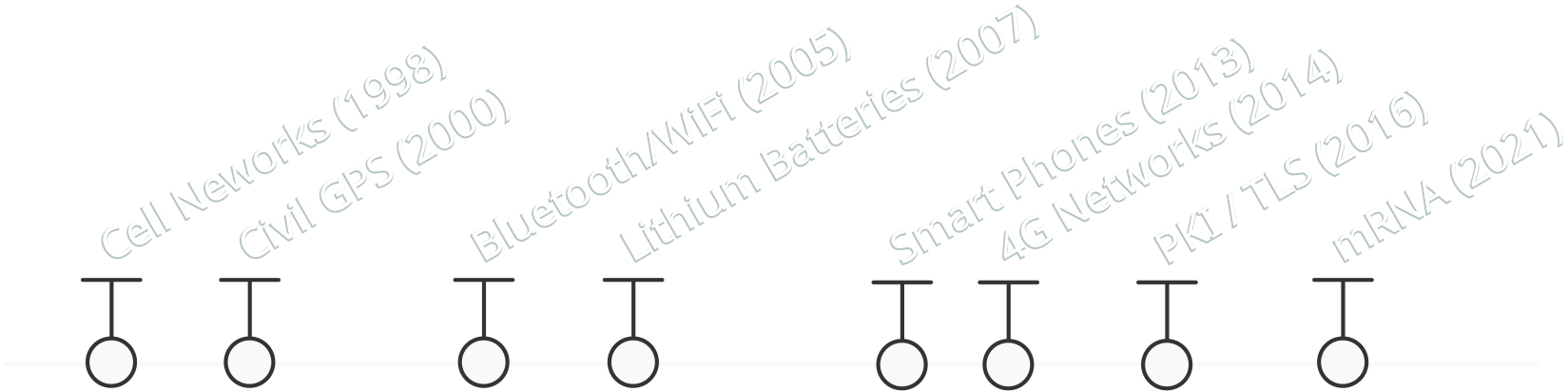
This isn’t meant to be an exhaustive list of all the technologies in the last 41 years. I’m sure there are thousands of examples that could fit into this list. Things like lithium-ion batteries, mRNA vaccines, LED lighting, GPS, clean power at scale, and many more have all been extremely impactful in everyday life for people across the planet. Rather, this is a list that I have put together that I believe have caused step functions in how the world operates.
Networked
Gaining internet access was an incredibly formative experience. As a teenager, the ability to communicate with friends instantly, at any hour, felt revolutionary. Our family’s encyclopedia set became obsolete overnight (though Encarta ‘96 had already begun that shift). Music could be “found” without having to go buy a CD. Even though the process of connecting and searching was primitive, compared to today, it was clear that this technology was going to get faster, better, and easier to use with time.
As time went on, access speed increased. More websites came online. More choices for email (beyond just your ISP) and other messaging services to communicate. New backend/frontend technologies became available, enabling dynamic experiences on the web. Sites like Google, Facebook, MySpace, Twitter, Wikipedia and Amazon all enabled people to connect, shop, learn and play like no other time in history.

For me, this was all happening between my mid-teen years and the start of college. For some, I’m sure it was a significant shift in how they interacted with the world. For me, it felt like a natural transition into a modern adult world.
Mobile
Society saw there was value in being able to access the internet outside of a hardline connection. Public WiFi was available in some places, but the devices to access these networks were typically laptops. Cell networks were starting to evolve in the early 2000s and could provide some low-bandwidth data functionality. BlackBerry, Palm and other handheld PDA devices were filling this gap. However, they were expensive, slow and didn’t seem to appeal to a mass market.
In January 2007, Steve Jobs stood on-stage (while the engineers sat in the 5th row drinking scotch) and revealed the iPhone.
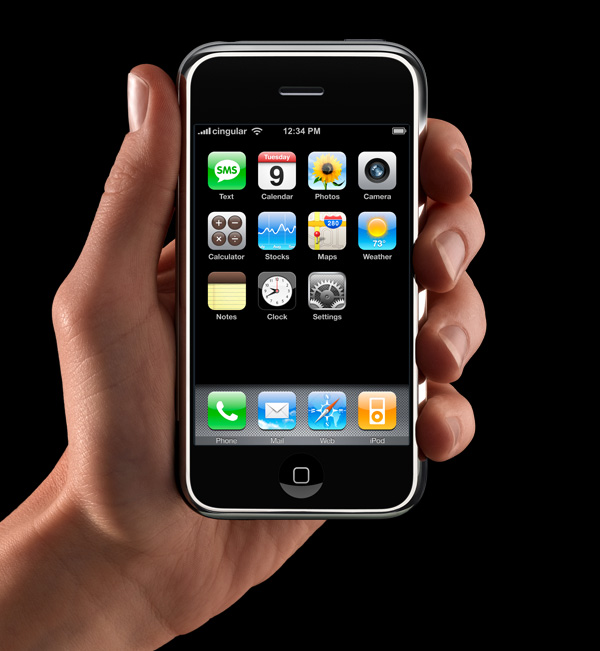
The following year, HTC entered the space with the HTC Dream and Apple released the iPhone 3G. These devices, which introduced the mainstream to mobile internet, opened up a whole new set of ways to entertain ourselves, communicate with each other, and interact with the world.
Services that already existed in the more traditional web, like Facebook, Pandora, Google, and YouTube, quickly made themselves available on these devices. Some were initially available via web interfaces, but they quickly pivoted to native apps. It’s wild to consider that the original iPhone didn’t launch with an app store.
Having access to all of the internet in your pocket felt like something right out of science fiction. Even being in my 20s, it really did feel like a huge jump in our capabilities as a society. No longer could you be in a conversation and just make up nonsense and not be fact-checked. New services were created that allowed for things like ride-sharing, personal shoppers and food delivery. The gig economy was very much enabled by smartphones. Other, more traditional industries, were also transformed. Event tickets, online shopping and person-to-person or retail payments all saw major changes in how they were done. Public safety also has improved, as alerts could be sent out en masse for weather or other public safety concerns. Gone are the days of being glued to a TV or radio during the possibility of severe weather.
There’s a whole new creator economy that has sprung up, albeit more recently, around short-form ephemeral content. All of it was enabled by the internet-connected computer in our hands.
Agentic Intelligence: Enabled
In 2026, generative AI services have exploded into the world, and the world will never be the same.

Right off the bat, I want to state that I don’t support companies destroying the world we live in just for the sake of profits. Generative AI has a lot of stigma around it, for a lot of different reasons. I believe that responsible development and use of technology can be done. In some aspects, it may require government mandates. The training data can be ethically sourced and we don’t have to cause irreparable harm to the environment. This will require the federal government actually do something, instead of just allowing the tech oligarchs to do whatever they want.
There were indications in 2023 that GPT-3.5 and GPT-4 had some interesting use cases. Generating small text snippets was novel and occasionally useful. They could do some simple proofreading or rewriting. If you asked these models to produce a recipe for cupcakes, it could look plausible while still having significantly wrong ingredient ratios. They were unreliable for certain questions and not useful for current events, as they lacked up-to-date information in the training data set. At that point, asking models to produce code would sometimes result in something useful, but not always. At best, it felt like better autocomplete than IntelliSense was offering at the time.
During this time, image classifiers were starting to get better and better, along with diffusion models. Models were being trained on how to use tools. Multimodal models were in development, which would allow for more capability than the current LLMs had. Along with the concept of Agentic AI, all of this was about to change the way people interact with these tools in a big way.
I remember having a conversation with a friend and saying I was really excited about the prospect of agents being able to perform tasks for me. Things like placing a grocery order for pickup or waiting in a virtual line to buy concert tickets. Strangely, I really hadn’t thought much about it in the context of developing software. It totally makes sense, though: agents can build code, write tests, and validate it. Now they can literally take an idea to a completed project with some guidance. There are certainly still shortcomings, and developers should still ultimately be held responsible for the code they produce, but the models are getting damn close to being experts in software engineering.
Gen AI has fully penetrated the SWE domain, and I think over the course of the next year or so we’ll see other domains quickly adopt the technology in the same way. This is outside the very “obvious” uses of “Customer Service Agents” and “Administrative Work.” The jobs of marketers and voice actors are, to some degree, in jeopardy. There are certainly uses for these tools that enable people to work, create, and build in ways like never before, but there’s also the possibility that humans are cut out of the loop altogether.
We’re now past the point where LLMs are unreliable most of the time. I would venture to guess more people are turning to AI models for even things as simple as web search. The tools often feel faster than a traditional web search. Who wants to comb through a bunch of web pages (many of which are now generated), searching through tons of text, when an agent can just do it for you? I think it’s still worth checking the sources the tools are using to formulate their results, especially if your seeking important answers. Sometimes they still get it wrong.
However, today is the worst these technologies will ever be… so they only stand to get better.
The genie really is out of the bottle now, and there’s no putting it back in.
The future…
As I sit here, right after my 41st birthday, reflecting on and writing about tech, it’s both astonishing and terrifying.
These tools have permeated my everyday life. I like to believe they’ve been significantly helpful. I can’t deny that I have some concern around data privacy and the broader effects of the technology on society.
I’m not new to technology upending the way we do things. Technology as a forcing function has been something I’ve been receptive to for a long time. This does feel a bit different though. Not just because there are books about AGI like “If Anyone Builds It, Everyone Dies” or people online that are so opposed to AI they screech that everything is Gen AI without any real knowledge about how to separate the nuances around the technology. This feels different because of how incredibly fast it is permeating so many spaces. The changes have been significant in spaces where the tools have been deployed. The closest analogs that I have come up with are the step functions in technology that I’ve written about above.
I should more often reflect on the question:
“If it all went away tomorrow, would I still be able to do my job? Could I still find answers to questions on my own? Could I still force myself to think critically about problems and how to solve them?”
There’s a video on X.com that talks about students failing to think critically (backup link). I think this could become a real problem without an easy solution. AI can help people avoid learning how to think critically because they just expect to offload the thinking part to the technology. I hope for the sake of the next generation of thinkers, this is just part of the journey of learning how to use these tools.
I’m optimistic about the future. I think Agentic AI opens more doors for people to build, create, and learn more now, than any other time in history. Individuals will likely be able to start businesses and create products that would have required many more people in the past. I’m hopeful that these tools will allow medical research to happen at a quicker pace and make diagnoses faster and more accurate. I’m hopeful that the mundane tasks that Agentic AI can easily automate can free people up for things they want to do instead. I think cooperation between technology leaders and good faith governments can develop governance around these technologies.
I truly hope that the proliferation of Agentic AI will bring about a better future for humanity.
-Tom